
The new website is fully functional, and we're putting the finishing touches in place.
How to Store Spore Syringes: The Complete Guide
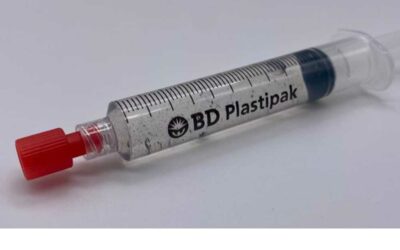
Spore syringes are commonly used in mycology for the microscopic examination of mushroom spores. They typically contain a liquid suspension of spores in a suitable carrier fluid, allowing a sample to be transferred for observation under a microscope. Like other biological samples, their condition can be influenced by how they are packaged, handled and stored.
Appropriate storage and handling help protect the integrity of a sample and reduce the likelihood of problems such as damaged packaging or contamination. These factors are particularly relevant when the aim is to examine spores and obtain clear, reliable microscopic observations.
This guide explains what spore syringes contain, the factors that can affect their condition, and the general principles of handling and storage. It also covers common mistakes and what to consider when assessing a sample.
What Is a Spore Syringe?
A spore syringe is a small syringe containing a suspension of mushroom spores in liquid. It provides a convenient way to handle and transfer small quantities of spores for purposes such as microscopic examination and educational mycology research.
Mushroom spores are microscopic reproductive structures produced by fungi. They play an important role in fungal reproduction and dispersal, allowing fungi to spread and establish themselves in suitable environments. Their characteristics vary between species and can provide useful information for mycological study.
What Does a Spore Syringe Contain?
A typical mushroom spore syringe contains spores suspended in a liquid carrier, commonly sterile water. The spores themselves are microscopic and may not be individually distinguishable without magnification. Depending on the sample, they may be distributed throughout the liquid or appear in small concentrations.
Spores are produced by mature fungi as part of their reproductive cycle. In many familiar mushroom-forming fungi, they develop on specialised structures associated with the fruiting body. Once released, they can be dispersed by air, water and other environmental processes.
It is important to distinguish a spore suspension from a liquid culture. Although both involve liquid samples, they are not the same thing. A spore suspension contains individual fungal spores, whereas a liquid culture contains fungal material growing in a liquid medium. The distinction is relevant when examining samples because their composition and microscopic characteristics differ.
Why Are Spore Syringes Used?
Spore syringes are particularly useful for microscopic examination because they provide a practical way to handle and transfer a liquid sample onto a microscope slide.
Under magnification, mushroom spores can be examined for a range of characteristics, including:
- Shape: Spores can have different shapes, including elliptical, spherical and elongated forms.
- Size: Measurements can help distinguish between different fungal species and groups.
- Colour: Spore colour is an important taxonomic characteristic, although it is not always easy to assess from an individual spore.
- Surface characteristics: Some spores have relatively smooth surfaces, while others display distinctive textures or ornamentation.
- Structural features: Depending on the species, additional characteristics such as the presence of a germ pore may be visible.
These observations form part of the wider study of fungal identification and classification. Spore morphology can provide useful supporting evidence when examining fungi, although identification should not generally rely on a single microscopic feature in isolation.
What Factors Affect Spore Syringe Storage?
Spore syringes contain biological material, so their condition can be influenced by environmental conditions, packaging and handling. Although mushroom spores have evolved to withstand a range of environmental challenges, this does not mean that every sample will remain unchanged indefinitely.
Understanding the factors that can affect sample integrity helps explain why storage instructions, packaging quality and careful handling matter.
Temperature Fluctuations
Temperature is an important consideration when storing biological samples. Changes in environmental conditions can affect the physical and chemical properties of the liquid suspension and may influence the condition of the material over time.
Mushroom spores are adapted to periods outside the parent organism, but their characteristics and environmental tolerances vary between species. It is therefore unwise to assume that all spore samples respond identically to changes in temperature.
Repeated or extreme temperature fluctuations are best avoided when maintaining the condition of a microscopy sample. However, it is important to distinguish between preserving the physical integrity of a sample and maintaining biological viability. These are related but separate considerations, and a sample that appears unchanged is not necessarily biologically unaffected.
For this reason, storage recommendations should be based on the supplier’s product-specific guidance rather than assuming that one set of conditions is suitable for every spore syringe.
Exposure to Light
Prolonged exposure to direct sunlight is another environmental factor worth considering when handling biological samples. Sunlight contains ultraviolet radiation, which can cause molecular damage in biological materials under sufficient exposure.
Fungal spores have different protective structures and levels of environmental resistance, so their response to light is not uniform. Ordinary indoor lighting should not automatically be considered damaging, but prolonged direct sunlight is an unnecessary source of environmental exposure.
The packaging itself can also influence how much light reaches the contents. Opaque or protective packaging can help shield samples from direct light and reduce unnecessary exposure during storage.
Contamination
Contamination occurs when unwanted microorganisms or foreign material are introduced into a sample. In microscopy, this can affect the appearance and interpretation of observations, particularly when examining material that should contain a relatively consistent sample.
Potential sources include compromised packaging, damaged seals, unclean handling equipment and accidental contact with unsuitable surfaces.
Contamination is not always obvious from the appearance of a syringe. Some unwanted microorganisms are microscopic, while other changes may be difficult to distinguish from naturally occurring variation within a sample.
Maintaining the integrity of the original packaging and avoiding unnecessary contact with the contents are therefore sensible precautions. If packaging is damaged or a sample appears compromised, it is better to seek advice from the supplier rather than assume that it remains suitable for examination.
Physical Handling
Physical handling can also affect the condition of a spore syringe. Although syringes are designed to contain liquid samples, they can still be damaged through rough handling, excessive pressure or accidental impact.
Cracked barrels, loose connections, damaged caps and leaking seals can compromise the packaging and potentially introduce unwanted material.
It is good practice to inspect the external condition of a syringe and its packaging when received. Labels should remain legible, caps should be secure and there should be no obvious signs of leakage or physical damage.
Unnecessary handling should be avoided, particularly where it involves repeatedly opening or disturbing the packaging. Careful handling helps reduce the likelihood of accidental damage and makes it easier to identify any changes in the condition of a sample.
How to Store Spore Syringes Safely
Appropriate storage begins with following the instructions supplied with the product. Different suppliers and products may have different packaging specifications and storage recommendations, so there is no universal approach that should automatically be applied to every spore syringe.
Keeping syringes in their original packaging is generally sensible. Original packaging helps protect the product, keeps any accompanying information together and makes it easier to identify the sample. Avoid transferring syringes into unlabelled containers or removing information that may be needed later.
Handle syringes carefully and avoid unnecessary contact with the caps, connections and other parts of the packaging. Check for obvious signs of damage or leakage, particularly if a package has been transported or handled roughly.
Product labels should remain clear and legible. Retaining information such as the specimen name, supplier details and any batch or reference information can be useful when comparing samples or keeping records of microscopy observations.
Spore syringes should also be kept separate from food, medicines and everyday household items. Use a clearly designated storage area that reduces the risk of accidental damage, confusion or inappropriate handling, particularly in households with children or pets.
Finally, avoid making assumptions about storage conditions or shelf life based on general advice found online. Manufacturer and supplier instructions should take precedence, particularly where a product has specific packaging or handling requirements. If you are uncertain about the condition of a syringe, contact the supplier for clarification.
How Long Do Spore Syringes Last?
There is no universal shelf life for mushroom spore syringes. How long a particular sample remains in suitable condition depends on several factors, including the characteristics of the spores, the composition of the suspension, the quality of the packaging and the conditions under which it has been stored.
Different manufacturers may use different preparation methods, materials and packaging, meaning that storage recommendations and expected shelf life can vary between products. A general timeframe quoted online should therefore not be treated as a guarantee that every spore syringe will remain in the same condition for that length of time.
The history of a sample is also important. Packaging that has remained intact and protected from unnecessary environmental exposure is preferable to a syringe that has experienced damage, leakage or uncertain storage conditions.
It is worth remembering that appearance alone cannot establish the quality or biological condition of a spore suspension. A sample may look unchanged while still having undergone changes that cannot be identified through visual inspection. Equally, some natural variation in the appearance of a suspension does not necessarily indicate a problem.
For these reasons, always refer to the manufacturer’s or supplier’s guidance when considering shelf life. If a product has an expiry date or recommended period of use, follow that information rather than relying on generic claims. Where no timeframe is provided, contact the supplier for clarification.
Common Spore Syringe Storage Mistakes
Although spore syringes are relatively straightforward products to handle, a few common mistakes can create unnecessary uncertainty about their condition. Understanding these issues helps reduce the likelihood of damaged packaging, lost product information and compromised samples.
Ignoring product-specific storage instructions
One of the most common mistakes is assuming that all spore syringes have identical storage requirements. Different products and manufacturers may have different recommendations, so generic advice should not automatically replace the instructions supplied with an individual product.
Storing damaged or leaking packaging
A syringe with a cracked barrel, loose connection or leaking seal may no longer provide adequate protection for its contents. Damaged packaging should not be overlooked, even if the liquid itself appears unchanged.
Removing or obscuring product labels
Labels provide useful information about the contents and their origin. Removing them or allowing them to become illegible can make it difficult to distinguish between samples, check product details or refer back to the supplier.
Relying on appearance alone
A clear-looking suspension is not necessarily an indication of sample quality, just as visible variation does not automatically establish contamination. Microscopic and biological characteristics cannot always be assessed through visual inspection of the syringe.
Using products with compromised packaging
If the packaging has been damaged, opened unexpectedly or shows signs of leakage, it is better to seek advice from the supplier than assume the sample remains suitable for examination.
Assuming every product has the same shelf life
Storage recommendations and expected shelf life can vary. Applying one product’s guidance to another without checking the manufacturer’s instructions can lead to inaccurate assumptions about sample condition.
How to Tell If a Spore Syringe Has Been Compromised
Assessing the condition of a spore syringe involves looking at both the packaging and the sample itself. Some problems are relatively easy to identify, while others cannot be reliably established through visual inspection alone.
Damaged or Leaking Packaging
Visible cracks, loose connections, damaged caps and signs of liquid leakage are reasons to question the condition of a syringe. A compromised seal can reduce the protection provided by the original packaging and create opportunities for unwanted material to enter.
If you notice damage, avoid assuming that the contents remain unaffected. Contact the supplier and explain what you have observed.
Unexpected Changes in Appearance
Changes in colour, unusual visible material or unexpected differences in the liquid suspension may warrant further investigation. However, appearance alone cannot reliably confirm whether a sample is contaminated or otherwise unsuitable.
Mushroom spores are microscopic, and their distribution within a suspension can vary. Not every visible difference indicates a problem, and not every potential issue will be visible to the naked eye.
Uncertainty About Product Condition
If you are unsure whether a syringe has been stored appropriately, whether its packaging remains intact or whether an unusual appearance is normal, seek clarification from the supplier.
Avoid attempting to diagnose uncertain samples based solely on photographs or general descriptions found online. Product-specific information and advice from the original supplier are more useful when assessing an individual item.
Frequently Asked Questions About Spore Syringe Storage
How Should Mushroom Spore Syringes Be Stored?
Follow the storage instructions provided by the manufacturer or supplier. Keep syringes in their original packaging, avoid unnecessary handling and protect them from physical damage and unsuitable environmental conditions. If specific storage guidance is unavailable, contact the supplier rather than assuming that generic recommendations apply.
Do Spore Syringes Have an Expiry Date?
Some suppliers provide an expiry date or recommended period of use, while others may provide different guidance. There is no universal expiry period applicable to every mushroom spore syringe. Always check the product information and follow any timeframe specified by the manufacturer.
Can Spore Syringes Deteriorate Over Time?
Yes. Like other biological samples, spore suspensions can undergo changes over time. Their condition may be influenced by the properties of the spores, the liquid suspension, packaging quality and storage history. A sample that looks unchanged is not necessarily biologically unchanged.
Does Light Affect Mushroom Spore Samples?
Prolonged exposure to direct sunlight can expose biological materials to ultraviolet radiation, which can cause molecular damage. The degree of sensitivity varies between organisms and samples. Protective packaging can help reduce unnecessary light exposure, and direct sunlight is best avoided.
How Can You Tell If a Spore Syringe Is Contaminated?
Contamination cannot always be identified through visual inspection. Damaged packaging, unexpected changes in appearance or unusual material may warrant further investigation, but none is definitive on its own. If you suspect a problem, contact the supplier for advice.
Are All Mushroom Spore Syringes Stored in the Same Way?
No. Products can differ in their preparation, suspension composition and packaging. Consequently, storage recommendations may also differ. Always prioritise the instructions supplied with the individual product rather than assuming that advice for one syringe applies to another.
Should Spore Syringes Be Kept in Their Original Packaging?
Generally, yes. Original packaging helps protect the product and keeps relevant labelling and product information together. Retaining this information also makes it easier to identify the sample and contact the supplier if you have questions about its condition.
Further Mycology Reading
Understanding spore syringe storage is one aspect of studying mushroom biology and microscopy. If you’re interested in learning more about fungal structures, identification and the characteristics of different mushroom species, our educational guides cover a range of related subjects.
- Mushroom Spore Identification: Learn about the microscopic characteristics used to examine and distinguish mushroom spores, including their shape, size and surface features.
- Rhizomorphic vs Tomentose Mycelium: Understand the differences between these two forms of mycelial growth and the structures associated with each.
- What Are Mushroom Spores? Explore the role of spores in fungal reproduction, dispersal and the wider fungal life cycle.
- Mushroom Microscopy: Learn more about the principles of microscopic examination and the structures that can be observed when studying fungi.