
The new website is fully functional, and we're putting the finishing touches in place.
Mycorrhizal Fungi: What They Are and How They Work
Mycorrhizal fungi form associations with plant roots, helping plants access nutrients and, in some circumstances, water from the surrounding soil. In return, plants supply the fungi with carbon compounds produced through photosynthesis. These relationships are widespread in terrestrial ecosystems and play an important role in plant nutrition, soil processes and the functioning of natural communities.
The term mycorrhiza describes the association between a fungus and a plant root. There are several types of mycorrhizal association, each with distinctive structures and relationships with particular groups of plants. Some are common among grasses and crops, while others are closely associated with forest trees, heathers or orchids.
Understanding how mycorrhizal fungi work helps explain how plants obtain nutrients, why different fungi are associated with different plants, and how organisms interact beneath the soil surface. However, the benefits are not identical in every case: the outcome depends on the fungal species, the plant, soil conditions and the wider environment.
What Are Mycorrhizal Fungi?
Mycorrhizal fungi are fungi that form specialised associations with the roots of plants. The word mycorrhiza comes from Greek roots meaning fungus and root, reflecting the close relationship between the two organisms. Rather than living entirely independently, the fungus and plant interact in ways that can benefit both.
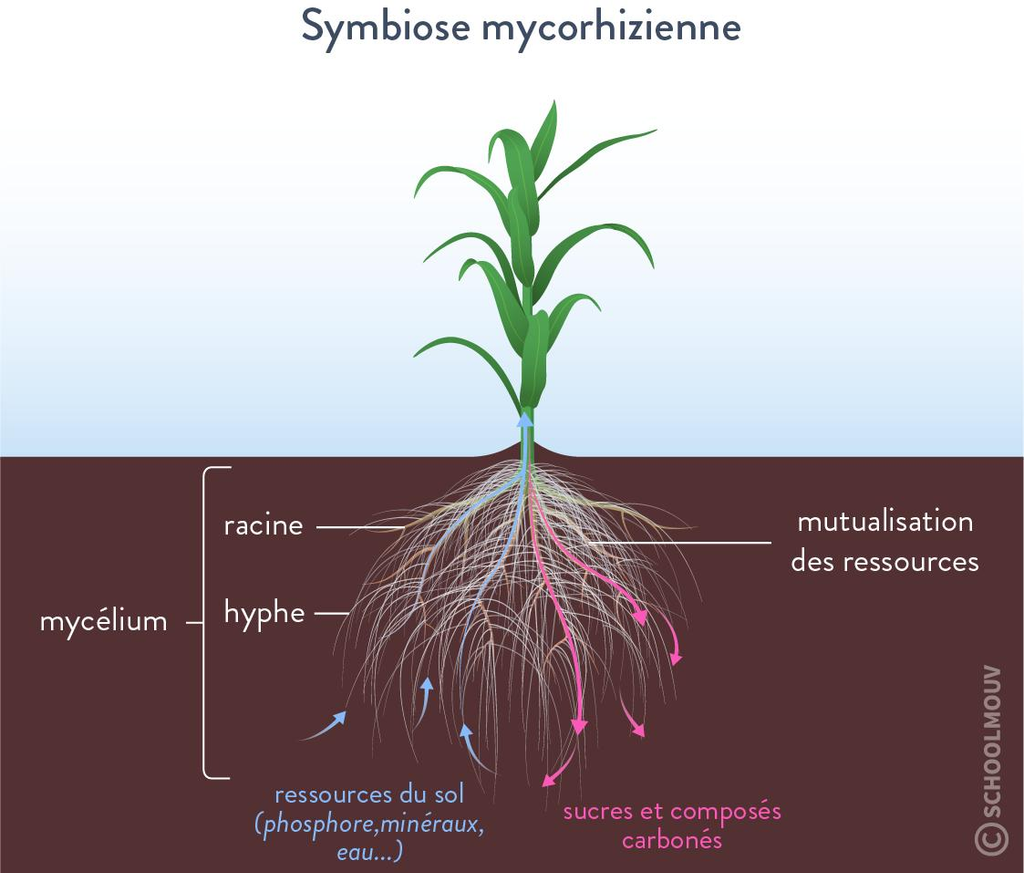
The relationship is generally described as a form of symbiosis, meaning a close association between different organisms. In many mycorrhizal relationships, the plant supplies the fungus with carbon compounds derived from photosynthesis. The fungus, in turn, helps the plant acquire nutrients from the soil. The extent of these benefits varies, and a mycorrhizal association does not automatically mean that the plant will grow faster or become healthier.
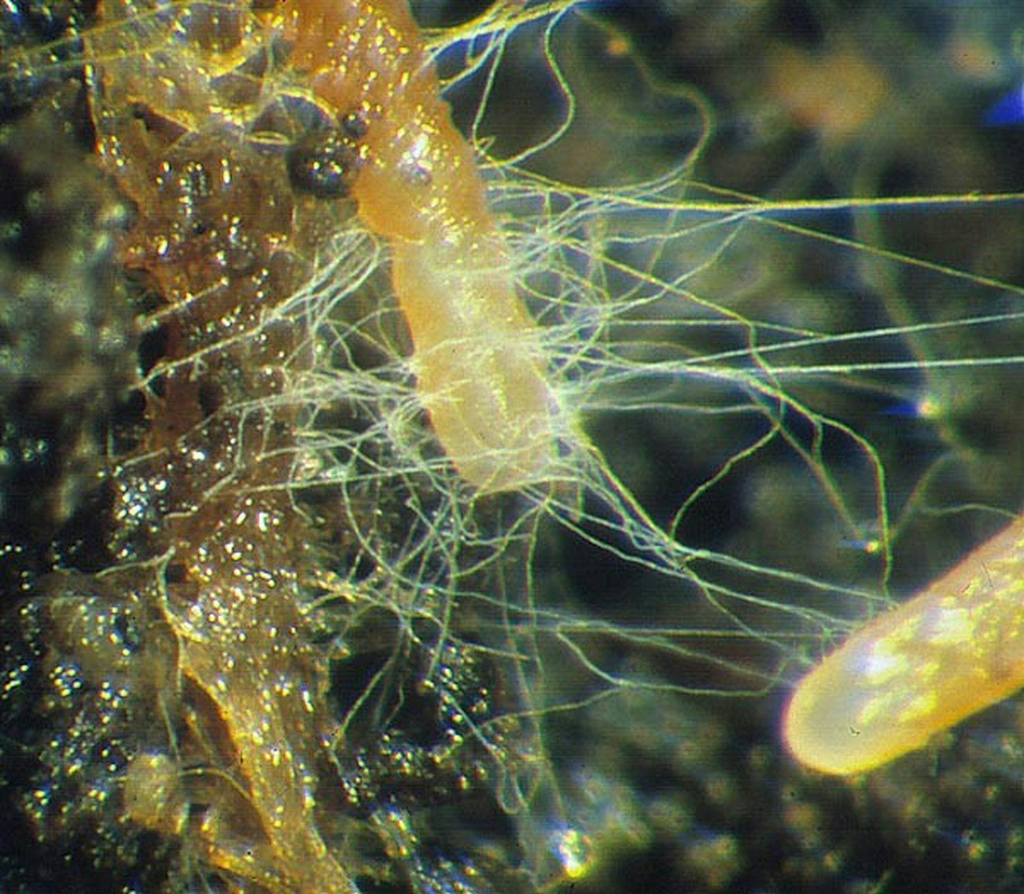
A key feature of these fungi is their growth through fine filaments called hyphae. These microscopic structures extend from the colonised roots into the surrounding soil, exploring spaces and surfaces that may be difficult for roots to reach. The hyphae absorb nutrients and transport them towards the fungus–plant interface, where resources can be exchanged.
Several related terms are useful to understand:
- Mycorrhiza: the association between a fungus and a plant root, including the structures formed through that association.
- Mycorrhizal fungi: the fungi capable of forming these root associations.
- Hyphae: individual microscopic filaments that make up fungal growth.
- Mycelium: the network of hyphae forming the main body of a fungus.
Mycorrhizal fungi differ from saprotrophic fungi, which obtain nutrients by breaking down dead organic material, and parasitic fungi, which obtain resources from living hosts, often causing harm. Mycorrhizal fungi generally receive carbon from living plants rather than relying solely on decomposing dead material.
These associations are found across many terrestrial habitats, from forests and grasslands to gardens and agricultural soils. Their structure and function depend on the particular fungus and plant involved, making mycorrhizae an important but diverse part of plant and soil biology.
How Do Mycorrhizal Fungi Work?
Mycorrhizal fungi work through an exchange of resources between a fungus and its plant host. The fungus extends its hyphae into the soil, acquiring nutrients and sometimes helping with water uptake. The plant supplies carbon compounds made through photosynthesis, which the fungus uses to grow, maintain its structures and carry out its activities.
This relationship links the plant’s above-ground access to sunlight with the fungus’s ability to explore the soil. However, the exchange is not a fixed transaction with identical results in every plant–fungus partnership. Its value depends on the nutrients available, the plant’s requirements, the fungal species and environmental conditions.
How fungi help plants absorb nutrients
Plant roots absorb mineral nutrients from the soil, but their reach is limited by their size, growth pattern and the conditions around them. Nutrients may be unevenly distributed, and some move only short distances through soil. Phosphorus, for example, often has limited mobility, meaning that roots can quickly deplete the supply immediately around them.
Mycorrhizal fungi extend this area of exploration. Their fine hyphae grow beyond the root surface and enter small soil pores, accessing nutrient sources that roots may not readily reach. Nutrients absorbed by the fungus can then be transported towards the plant through the fungal structures associated with the root.
Phosphorus is one of the best-established examples of this process. It is essential for energy transfer, nucleic acids and other cellular functions, but its availability to plants can be restricted by the way it binds to soil particles or occurs in poorly accessible forms.
Mycorrhizal fungi can improve phosphorus acquisition by exploring a larger volume of soil and accessing certain phosphorus sources. Depending on the association, they can also contribute to the acquisition of nitrogen and other mineral nutrients. The importance of each nutrient varies with the fungal group, the plant and the surrounding soil.
The benefits are not unlimited. If nutrients are already readily available, the additional contribution from the fungus may be relatively small. The plant also supplies carbon to maintain the association, so the overall effect on plant growth depends on whether the resources gained outweigh the costs.
How plants feed mycorrhizal fungi
Plants produce sugars and other carbon-containing compounds through photosynthesis, using energy from sunlight to convert carbon dioxide into organic material. Some of this carbon is allocated below ground to roots and associated organisms, including mycorrhizal fungi.
The fungus uses the carbon supplied by the plant to support its own metabolism, growth and maintenance. This allows it to extend hyphae through the soil, maintain its association with the roots and develop structures involved in resource exchange.
The amount of carbon transferred varies according to the plant, the fungal partner and environmental conditions. Plants must balance the cost of supporting fungal growth against other demands, including the growth of leaves, stems, roots, flowers and seeds.
This helps explain why mycorrhizal relationships are not always equally beneficial to the plant. Where the fungus provides access to a limiting nutrient, the exchange may be advantageous. Where the plant receives little benefit, the carbon cost may reduce or outweigh the gains.
How the exchange takes place
The precise structures involved depend on the type of mycorrhizal association. In arbuscular mycorrhizae, for example, the fungus forms highly branched structures called arbuscules inside root cells. These provide an extensive interface across which nutrients and carbon compounds can be exchanged.
In ectomycorrhizal associations, the fungus typically forms a sheath around the root tip and a network of hyphae between root cells. Exchange occurs across specialised interfaces within this arrangement rather than through arbuscules inside the cells.
In both cases, the fungus and plant maintain a close physical association that allows resources to move between them. The mechanisms differ, but the underlying principle is similar: the plant provides carbon, while the fungus can improve access to nutrients in the surrounding environment.
For example, a plant growing in soil where available phosphorus is limited may benefit from fungal hyphae exploring soil beyond the immediate root surface. The fungus acquires phosphorus and transfers some of it to the plant, receiving carbon compounds in return. How much this improves the plant’s growth depends on the conditions and the balance of resources exchanged.
Mycorrhizal fungi therefore do more than simply surround roots. They create specialised biological interfaces that connect plant metabolism with nutrient acquisition in the soil.
What Are the Main Types of Mycorrhizal Fungi?
Mycorrhizal associations occur in several forms, distinguished by how the fungus interacts with plant roots and which plants it commonly associates with. Four major types are arbuscular, ectomycorrhizal, ericoid and orchid mycorrhizae. Each has characteristic structures and ecological relationships, although the fungi involved and their effects can vary considerably within each group.
| Type | Key characteristic | Common plant associations |
|---|---|---|
| Arbuscular mycorrhiza (AM) | Branched fungal structures form inside root cells | Many grasses, herbs, crops and trees |
| Ectomycorrhiza (ECM) | A fungal sheath surrounds roots, with hyphae growing between root cells | Many forest trees, including pines, birches and oaks |
| Ericoid mycorrhiza (ERM) | Fine fungal hyphae form intricate coils inside root cells | Heather and other plants in the heather family |
| Orchid mycorrhiza (ORM) | Fungi form specialised associations with orchid roots and develop structures inside root cells | Orchids |
These categories describe different forms of association rather than four individual fungal species. They also differ in their evolutionary history, the structures involved and the ways they help plants obtain resources.
Arbuscular mycorrhizal fungi
Arbuscular mycorrhizal fungi form associations with a large proportion of terrestrial plant species. They are particularly widespread among grasses, herbaceous plants and many agricultural crops, and they also associate with numerous trees.
The defining feature of this association is the formation of arbuscules within root cells. These highly branched structures provide a large surface area for the exchange of resources between the fungus and plant. Although the arbuscules develop inside plant cells, they are separated from the plant cell’s internal contents by a specialised plant-derived membrane.
The fungus also produces hyphae that extend into the surrounding soil. These hyphae help acquire nutrients, particularly phosphorus, and transport them towards the root. In return, the plant supplies carbon compounds that support fungal growth and metabolism.
Some arbuscular mycorrhizal fungi also form storage structures, depending on the fungal group. Their association can influence plant nutrition, soil aggregation and responses to environmental stress, although the size and consistency of these effects depend on the plant, soil and growing conditions.
Arbuscular mycorrhizal fungi belong to the fungal phylum Glomeromycota. Unlike many familiar mushroom-forming fungi, they do not generally produce large, visible mushrooms. Their main structures are found within roots and in the surrounding soil.
Ectomycorrhizal fungi
Ectomycorrhizal fungi are particularly important in many woodland and forest ecosystems. They form associations with trees such as pines, birches, beeches and oaks, as well as other woody plants.
Their root structure differs from that of arbuscular mycorrhizae. Ectomycorrhizal fungi typically form a dense sheath, or mantle, around fine roots. From this sheath, hyphae grow between the root’s outer cells, forming a network known as the Hartig net. This network provides the interface for exchanging resources with the plant.
The fungal hyphae also extend into the soil, where they acquire nutrients and can access certain organic nutrient sources. Some ectomycorrhizal fungi are particularly effective at obtaining nitrogen from organic material, helping their host trees in soils where nutrients are not readily available in mineral forms.
Many familiar woodland mushrooms are produced by ectomycorrhizal fungi. Examples include numerous boletes, milkcaps, russulas and amanitas. However, not every species within a familiar mushroom genus necessarily has the same ecological relationship, so the association should not be inferred from appearance alone.
Ectomycorrhizal fungi are important components of forest ecosystems because their relationships with trees influence nutrient cycling, tree nutrition and interactions between organisms in the soil. Their effects vary across forest types and environmental conditions.
Ericoid mycorrhizal fungi
Ericoid mycorrhizal fungi associate with plants in the heather family, Ericaceae. These include heathers, heaths, bilberries and related plants, many of which grow in acidic soils where nutrients can be difficult to obtain.
The association takes place in the plant’s fine roots. Fungal hyphae form intricate coils inside root cells, creating an extensive interface between the fungus and plant.
One important feature of ericoid mycorrhizae is their ability to help host plants acquire nutrients from organic material. In acidic, organic-rich soils, nitrogen and other nutrients may be held within complex compounds that are not readily accessible to plant roots. Certain ericoid fungi can produce enzymes that help break down these compounds, making nutrients available for uptake.
This ability is ecologically significant because many plants in the heather family thrive in environments where other plants may struggle to obtain sufficient nutrients. Their fungal partners help them exploit resources available in these habitats.
The relationship is not identical in every case. The fungi involved differ in their capabilities, and the extent of the benefit depends on the host plant, soil conditions and available resources.
Ericoid mycorrhizae therefore illustrate how specialised fungal associations can help plants survive in particular environments by improving access to nutrients that would otherwise be difficult to obtain.
Orchid mycorrhizal fungi
Orchids have distinctive relationships with fungi that are important during seed germination and, in many species, throughout their lives.
Orchid seeds are generally extremely small and contain very limited food reserves. Unlike many other plant seeds, they often cannot germinate and develop normally without an appropriate fungal partner. The fungus supplies carbon and nutrients that support the developing embryo, allowing it to form an early growth stage known as a protocorm.
Within orchid root tissues and other associated structures, the fungi form coils of hyphae called pelotons. These structures are involved in the exchange of resources between the fungus and plant. The plant can obtain carbon and nutrients through the association, while the fungus interacts with the plant in ways that vary across orchid species and fungal partners.
The relationship can change as an orchid develops. Some adult orchids become substantially more self-sufficient through photosynthesis, while others continue to depend heavily on fungal resources. A number of orchids have little or no chlorophyll and rely on fungi for carbon throughout their lives. These plants are described as mycoheterotrophic.
Orchid mycorrhizae demonstrate that fungal associations can be essential to a plant’s development rather than simply improving nutrient uptake. They also show why mycorrhizal relationships should not be treated as a single, uniform process: the degree of dependence and the direction of resource transfer can differ considerably between plant groups.
Why these differences matter
Although all four types involve fungi associated with plant roots, their structures and ecological roles are distinct. Arbuscular mycorrhizae are widespread among land plants, ectomycorrhizae are particularly prominent in many forests, ericoid mycorrhizae are adapted to the biology of plants in the heather family, and orchid mycorrhizae play a distinctive role in orchid germination and nutrition.
These differences influence which plants can associate with particular fungi, how nutrients are acquired and how the relationships function in different environments. Understanding the type of mycorrhizal association is therefore an important starting point for explaining the role of fungi in plant biology and soil ecology.
What Are the Benefits of Mycorrhizal Fungi?
Mycorrhizal fungi can benefit plants by improving access to nutrients, influencing water uptake and helping plants respond to certain environmental stresses. They also contribute to soil processes and can influence the composition of plant communities. The extent of these benefits varies according to the fungal species, the plant, soil conditions and the surrounding environment.
The relationship is not automatically beneficial in every situation. Plants supply carbon to their fungal partners, so the overall effect depends partly on whether the resources gained outweigh the costs of maintaining the association.
Improved access to nutrients
One of the best-established benefits of mycorrhizal fungi is their ability to help plants acquire nutrients from the soil. Their fine hyphae extend beyond the immediate root surface, exploring a greater volume of soil and reaching small pores that roots may not readily enter.
This is particularly important for phosphorus, an essential nutrient involved in energy transfer, DNA and cell membranes. Phosphorus often moves slowly through soil and may become bound to soil particles, limiting the amount available to roots. Mycorrhizal hyphae can explore soil beyond the zones where roots have already depleted available phosphorus and transport some of the absorbed nutrient to the plant.
Certain mycorrhizal fungi can also contribute to nitrogen acquisition. This is particularly relevant to some ectomycorrhizal and ericoid associations, in which fungi can access nitrogen from organic material using specialised enzymes. The ability to acquire nutrients from these sources varies between fungal species and is influenced by soil conditions.
Mycorrhizal fungi can also affect the uptake of other mineral nutrients, including zinc and copper. However, the benefits depend on which nutrients limit plant growth and how readily they are available in the surrounding soil.
Water uptake and drought tolerance
Mycorrhizal fungi may help plants maintain water uptake under certain conditions. Their hyphae extend into the soil beyond the immediate root surface, potentially accessing water held in small soil pores and other areas that roots cannot easily exploit.
Some mycorrhizal associations are also linked to changes in root development, water relations and physiological responses to drought. Depending on the plant and fungal partner, these changes may help plants maintain growth or reduce the effects of water stress.
The benefits are not universal. Their magnitude depends on soil moisture, soil structure, the fungal species involved and the plant’s own ability to regulate water loss. Mycorrhizal fungi do not make plants immune to drought, and an association that helps under one set of conditions may have little effect under another.
Plant health and resistance to stress
Mycorrhizal associations can influence how plants respond to environmental stresses, including nutrient deficiencies, salinity and some forms of drought. They may also affect root development, nutrient balance and aspects of the plant’s defence responses.
Certain mycorrhizal fungi can reduce the impact of particular soil-borne pathogens in some circumstances. Possible mechanisms include competition around the root, changes in root physiology and the activation of plant defence responses. However, these effects depend on the organisms involved, and mycorrhizal fungi do not provide general protection against plant disease.
It is therefore more accurate to describe mycorrhizae as one factor that can influence plant health rather than a guaranteed method of preventing disease or environmental damage.
Soil structure and nutrient cycling
Mycorrhizal fungi contribute to the physical and biological processes that shape soil. Their hyphae grow between soil particles, roots and organic material, creating connections within the soil and influencing how particles aggregate.
Some fungi produce compounds that help stabilise soil aggregates, while their hyphae can physically bind particles together. These processes may influence soil structure, porosity and resistance to erosion, although the effects vary with fungal species and soil conditions.
Mycorrhizal fungi also participate in nutrient cycling by acquiring nutrients and transferring some of them to plants. Their growth, turnover and interactions with other soil organisms affect how carbon and nutrients move through ecosystems. The extent to which these fungi contribute to decomposition and the release of nutrients depends on the type of mycorrhizal association. For example, some ectomycorrhizal fungi can access nutrients from organic matter, whereas arbuscular mycorrhizal fungi generally rely more heavily on mineral nutrient sources.
These activities make mycorrhizal fungi important components of soil ecosystems, but they do not operate in isolation. Bacteria, decomposer fungi, plants and other soil organisms also influence soil structure and nutrient availability.
Plant communities and biodiversity
Mycorrhizal fungi can influence which plants establish, how well they grow and how they interact with neighbouring species. Different plants associate with different fungal partners, and the benefits they receive can vary according to the species involved and the surrounding environment.
In some ecosystems, these relationships help particular plants establish in soils where nutrients are difficult to obtain. In others, differences in fungal associations can influence competition between plants, potentially affecting which species become dominant.
Mycorrhizal fungi can also affect interactions between plants and other soil organisms. Their presence may change nutrient availability or influence how plants respond to neighbouring roots and soil-borne pathogens. These effects can contribute to the composition and diversity of plant communities over time.
However, mycorrhizal fungi do not invariably increase biodiversity. Their effects depend on the balance of interactions among plants, fungi and other organisms. Some associations may favour particular plant species over others, while different associations can support the coexistence of a wider range of species.
Overall, mycorrhizal fungi are important because they influence several connected processes, from individual plant nutrition to soil functioning and ecosystem dynamics. Their effects are best understood in the context of the specific plants, fungi and environmental conditions involved.
What Are Mycorrhizal Networks?
Mycorrhizal networks form when fungal hyphae associated with plant roots extend through the soil and connect with other roots. In some cases, a single fungal network can be associated with multiple plants, creating pathways through which certain substances may move between organisms.
These connections have attracted considerable attention because they offer a way to understand how plants and fungi interact below ground. They are sometimes described as the wood wide web, a popular term that compares underground fungal networks with communication networks. However, this analogy can be misleading if it suggests that forests operate as a single, coordinated system. The actual relationships are more complex, and their ecological significance remains an active area of research.
How do underground fungal networks form?
Mycorrhizal fungi grow through soil as networks of microscopic hyphae. When these hyphae associate with plant roots, the fungus can obtain carbon from the plant while helping it acquire nutrients. As fungal growth extends through the soil, the hyphae may encounter and associate with additional roots.
The resulting network can connect multiple plants through a shared fungal individual or fungal structure. This depends on the fungal species, the plants present and the way the fungus grows.
Not all fungal hyphae in soil belong to the same network. Different fungal species can occupy the same area, and their networks may overlap without being directly connected. Roots can also associate with different fungi at the same time.
Consequently, a forest floor contains a complex mixture of roots, fungal networks and other soil organisms rather than one continuous underground web.
Can mycorrhizal fungi connect different plants?
Yes. Some mycorrhizal fungi form associations with the roots of multiple plants, creating what are known as common mycorrhizal networks. These networks can provide pathways through which certain substances, including carbon- and nutrient-containing compounds, may move between connected organisms.
Researchers have investigated the transfer of nutrients and carbon between plants through these networks, including whether neighbouring plants can benefit from resources acquired by other plants. Experiments have demonstrated that transfers can occur in some systems, but detecting a transfer does not necessarily establish how much it contributes to a recipient plant’s growth or survival under natural conditions.
The importance of these connections depends on several factors, including the plant and fungal species, the availability of nutrients, the environmental conditions and the direction and quantity of resource movement.
A network connecting two plants should not automatically be interpreted as evidence that one plant is deliberately feeding the other. Movement can occur through biological processes without implying that the organisms are acting cooperatively or intentionally.
Do trees use fungal networks to communicate?
The idea that trees communicate through underground fungal networks has become popular, particularly through the phrase wood wide web. There is scientific evidence that plants can exchange substances through some common mycorrhizal networks, and plants can respond to chemical signals and changes in their environment. However, these findings do not support every claim made about underground forest communication.
Several distinctions are important.
First, the movement of a substance between plants does not, by itself, demonstrate communication. Communication implies that a signal conveys information and influences a response. Establishing that process requires evidence beyond simply detecting the movement of carbon or nutrients.
Second, resource transfer does not necessarily mean that a larger or healthier tree deliberately supports a smaller or weaker neighbour. The direction, amount and ecological consequences of transfer depend on the biological system and environmental conditions.
Third, the presence of a fungal connection does not establish that it has a substantial effect on the plants involved. Researchers must distinguish between a transfer that can be detected experimentally and one that meaningfully affects plant growth, survival or forest dynamics.
Mycorrhizal networks are an important part of below-ground ecology, but the popular wood wide web analogy should be treated as a simplified description rather than a complete explanation of forest relationships. Their role in resource transfer and plant interactions continues to be investigated.
Where Are Mycorrhizal Fungi Found?
Mycorrhizal fungi occur in many terrestrial environments, including forests, grasslands, gardens and agricultural soils. Their distribution depends on the plants present, the soil environment and the fungal species. Different types of mycorrhizal association are characteristic of different plant groups and habitats.
Mycorrhizal fungi in forests
Many forest trees form mycorrhizal associations that help them acquire nutrients from the soil. Pines, birches, beeches and oaks, for example, commonly associate with ectomycorrhizal fungi. These relationships are an important feature of many woodland ecosystems.
Some familiar woodland mushrooms are the reproductive structures of ectomycorrhizal fungi. Boletes, milkcaps and many russulas are examples. Their visible mushrooms may appear above ground, but much of the fungus exists as mycelium associated with roots and extending through the soil.
Other forest plants, including many herbaceous species, form arbuscular mycorrhizal associations.
Mycorrhizal fungi in gardens and grasslands
Mycorrhizal fungi are also found in garden soils, meadows and grasslands. Many grasses, wildflowers, shrubs and ornamental plants can associate with arbuscular mycorrhizal fungi.
These fungi can contribute to nutrient acquisition and influence interactions between plants and the soil environment. Their abundance and activity depend on factors such as plant cover, soil disturbance, fertiliser use and the availability of suitable host plants.
Mycorrhizal fungi in agricultural soils
Many crops form mycorrhizal associations, making these fungi relevant to agricultural nutrient management and soil ecology. Associations with arbuscular mycorrhizal fungi are common among crops such as wheat, maize and many legumes.
The benefits can include improved access to phosphorus and, in some circumstances, better performance under environmental stress. However, the effects vary with crop species, soil conditions and farming practices. Fertiliser inputs, tillage and crop rotations can influence mycorrhizal communities, so their contribution needs to be considered within the wider agricultural system.
Are all plants associated with mycorrhizal fungi?
No. Although mycorrhizal associations are widespread among land plants, some plant groups are typically non-mycorrhizal. Certain plants have evolved alternative strategies for obtaining nutrients, while others may form associations only under particular conditions.
Even among plants that commonly form mycorrhizae, the presence and activity of suitable fungi can vary. The relationship depends on the compatibility of the plant and fungus and the conditions in which they grow.
What Is the Difference Between Mycorrhizal Fungi and Other Fungi?
Fungi obtain nutrients in different ways. Some form close associations with living plants, while others decompose dead material or obtain resources from living hosts. These differences are important because they influence where fungi grow, how they interact with other organisms and what roles they play in ecosystems.
| Fungal group or lifestyle | Main relationship with organic material |
|---|---|
| Mycorrhizal fungi | Form associations with plant roots, generally exchanging plant-derived carbon for nutrients and other benefits |
| Saprotrophic fungi | Obtain nutrients by decomposing dead organic material |
| Parasitic fungi | Obtain resources from living hosts, often causing harm |
| Endophytic fungi | Live within plant tissues for part or all of their life cycle; their effects on the host vary |
Mycorrhizal fungi
Mycorrhizal fungi form specialised associations with plant roots. The plant supplies carbon compounds, while the fungus can help the plant acquire nutrients from the soil. These fungi are important in plant nutrition and soil ecology, and some produce visible mushrooms or other reproductive structures.
Saprotrophic fungi
Saprotrophic fungi obtain nutrients by breaking down dead organic material, such as fallen leaves, dead wood and other plant remains. Their enzymes break complex organic compounds into simpler substances that the fungi can absorb.
This process is important for decomposition and nutrient cycling, returning nutrients held in dead material to forms that can become available to other organisms.
Parasitic fungi
Parasitic fungi obtain resources from living organisms, often causing damage or disease. Plant-pathogenic fungi, for example, can infect roots, stems or leaves and reduce plant health.
Parasitism differs from a typical mycorrhizal relationship because the fungus benefits at the host’s expense. However, fungal interactions are diverse, and the effects of a particular association can depend on environmental conditions and the organisms involved.
Endophytic fungi
Endophytic fungi live within plant tissues for at least part of their life cycle without necessarily causing obvious disease symptoms. Some may benefit their hosts, others may have little measurable effect, and some can become harmful under certain conditions.
The term endophytic describes where a fungus lives rather than a single nutritional strategy. Endophytic fungi are therefore not automatically a separate category from all other fungal lifestyles, and some fungi can change their effects depending on the circumstances.
Can you identify a fungus by its appearance?
Not reliably. A mushroom’s shape, colour or size does not by itself establish how the fungus obtains nutrients or whether it forms mycorrhizal associations. These relationships are determined by the biology of the fungus and its interactions with other organisms, not simply by the appearance of its reproductive structures.
Mycorrhizal fungi also do not refer to one species or one particular type of mushroom. The term describes a broad group of fungi that form associations with plant roots. Understanding that distinction helps explain why fungi that look very different can play related ecological roles, while visually similar fungi may have very different ways of obtaining nutrients.
Can You Grow or Encourage Mycorrhizal Fungi?
Mycorrhizal fungi are often already present in soil, where they form associations with compatible plant roots. Rather than automatically adding more fungi, gardeners can often focus on maintaining conditions that allow existing fungal communities to function. Whether this is possible depends on the soil, the plants being grown and the surrounding environment.
Do mycorrhizal fungi occur naturally in soil?
Yes. Many soils contain native mycorrhizal fungi, although their abundance, diversity and activity vary considerably. Soil history, previous land use, plant cover, moisture, nutrient availability and disturbance can all influence which fungi are present.
Soil beneath established vegetation may support a different fungal community from recently disturbed ground or soil that has been intensively cultivated. Even where mycorrhizal fungi are present, they may not form associations with every plant. The relevant fungi must be compatible with the host, and conditions must allow the relationship to develop.
How can gardeners support mycorrhizal fungi?
The most useful approach is to consider the growing environment as a whole. Maintaining suitable plant cover gives compatible fungi living roots with which to associate. Avoiding unnecessary soil disturbance can help preserve existing fungal networks, while applying fertiliser only where needed may prevent excessive nutrient levels from reducing the plant’s reliance on certain mycorrhizal relationships.
Other sensible practices include maintaining appropriate soil moisture, adding organic matter where suitable and choosing plants suited to the soil and site. However, there is no single method that benefits every type of mycorrhizal fungus. Different plants form different associations, and practices that suit a woodland planting may not be appropriate for a vegetable bed or container.
Do commercial mycorrhizal products always work?
No. The results of commercial inoculants depend on several factors, including the fungal species or strains supplied, compatibility with the host plant, product viability and growing conditions. The fungi must also establish successfully and compete with organisms already present in the soil.
A product may have little effect if the plant does not form the relevant association, the growing conditions are unsuitable or native fungi are already providing similar benefits. Research findings from one crop or soil cannot automatically be applied to every garden.
Mycorrhizal inoculants can have a role in particular circumstances, but adding them is not a guarantee of better growth, higher yields or improved plant health. It is worth considering the plant’s needs and the existing growing conditions before assuming that an additional product is necessary.
Are Mycorrhizal Fungi Important for the Environment?
Mycorrhizal fungi are important components of terrestrial ecosystems because they influence how plants access nutrients and interact with the soil around them. Their fine hyphae extend through soil, helping to move nutrients towards plant roots and contributing to the wider processes involved in nutrient cycling.
These fungi can also influence plant communities by affecting which plants establish successfully, how they compete for resources and how vegetation responds to environmental change. Their interactions with bacteria, other fungi and soil-dwelling organisms add another layer of complexity to ecosystem functioning. The effects are not always the same: a particular association may benefit one plant more than another, depending on the species and conditions involved.
Mycorrhizal relationships are relevant to agriculture, forestry and ecological restoration. Understanding them may help researchers develop approaches to soil management, tree establishment and the recovery of degraded habitats. However, their practical value depends on the setting, and encouraging mycorrhizal fungi is not a substitute for addressing wider problems such as poor soil structure, nutrient imbalance or unsuitable planting choices.
Their role in the carbon cycle is another important area of research. Plants transfer carbon compounds to their fungal partners, while fungal growth and activity influence how carbon enters, moves through and is stored in soil. Some carbon may become associated with relatively persistent soil organic matter, but other carbon is released through respiration or decomposition. The overall outcome depends on fungal type, soil conditions, plant communities and the activity of other organisms.
For this reason, it is difficult to make a universal claim about how much carbon mycorrhizal fungi store or whether a particular mycorrhizal system will always increase long-term soil carbon. Their environmental importance lies in the many processes they influence, rather than one guaranteed outcome.
Frequently Asked Questions About Mycorrhizal Fungi
What are mycorrhizal fungi in simple terms?
Mycorrhizal fungi are fungi that form associations with plant roots. The fungus can help the plant access nutrients and, in some circumstances, water, while receiving carbon compounds made by the plant through photosynthesis.
Are mycorrhizal fungi good for plants?
They can improve nutrient uptake and influence plant growth, stress tolerance and health. However, the benefits depend on the fungal species, host plant and growing conditions. Not every association produces the same results.
What is the difference between mycorrhiza and mycelium?
Mycorrhiza describes the association between a fungus and plant roots. Mycelium is the network of fine fungal filaments, called hyphae, that forms the main growing body of a fungus. Mycelium may be involved in a mycorrhizal association, but the terms do not mean the same thing.
Do all plants have mycorrhizal fungi?
No. Many land plants form mycorrhizal associations, but some plant groups typically do not. Whether a plant forms these relationships depends on its biology and the fungal partners available.
Are mycorrhizal fungi the same as mushrooms?
No. A mushroom is a reproductive structure produced by certain fungi. Mycorrhizal fungi are classified by their relationship with plant roots. Some produce visible mushrooms, while others do not produce familiar mushroom-shaped structures.
Do mycorrhizal fungi connect trees underground?
Some mycorrhizal fungi form networks associated with multiple plants, including trees. These networks can provide routes for the movement of substances between plants and fungi. However, their extent and ecological significance vary, and popular descriptions of forests as a single cooperative communication network can overstate what the evidence establishes.
Can you see mycorrhizal fungi?
The fine hyphae and specialised structures associated with plant roots are generally too small to identify clearly without magnification. Some mycorrhizal fungi produce visible mushrooms or other reproductive structures, but seeing a mushroom does not by itself confirm the extent of its underground associations.
Can mycorrhizal fungi survive without plants?
Many mycorrhizal fungi depend on living host plants for the carbon they need to grow and reproduce. Some can persist for a period as spores or other resistant propagules without an active host, but their ability to survive independently varies between fungal groups. Persistence does not necessarily mean they can grow and complete their life cycle without a suitable plant.